QuadPay · Buy now, pay later
Designing buy now, pay later for US shoppers who'd never seen it.
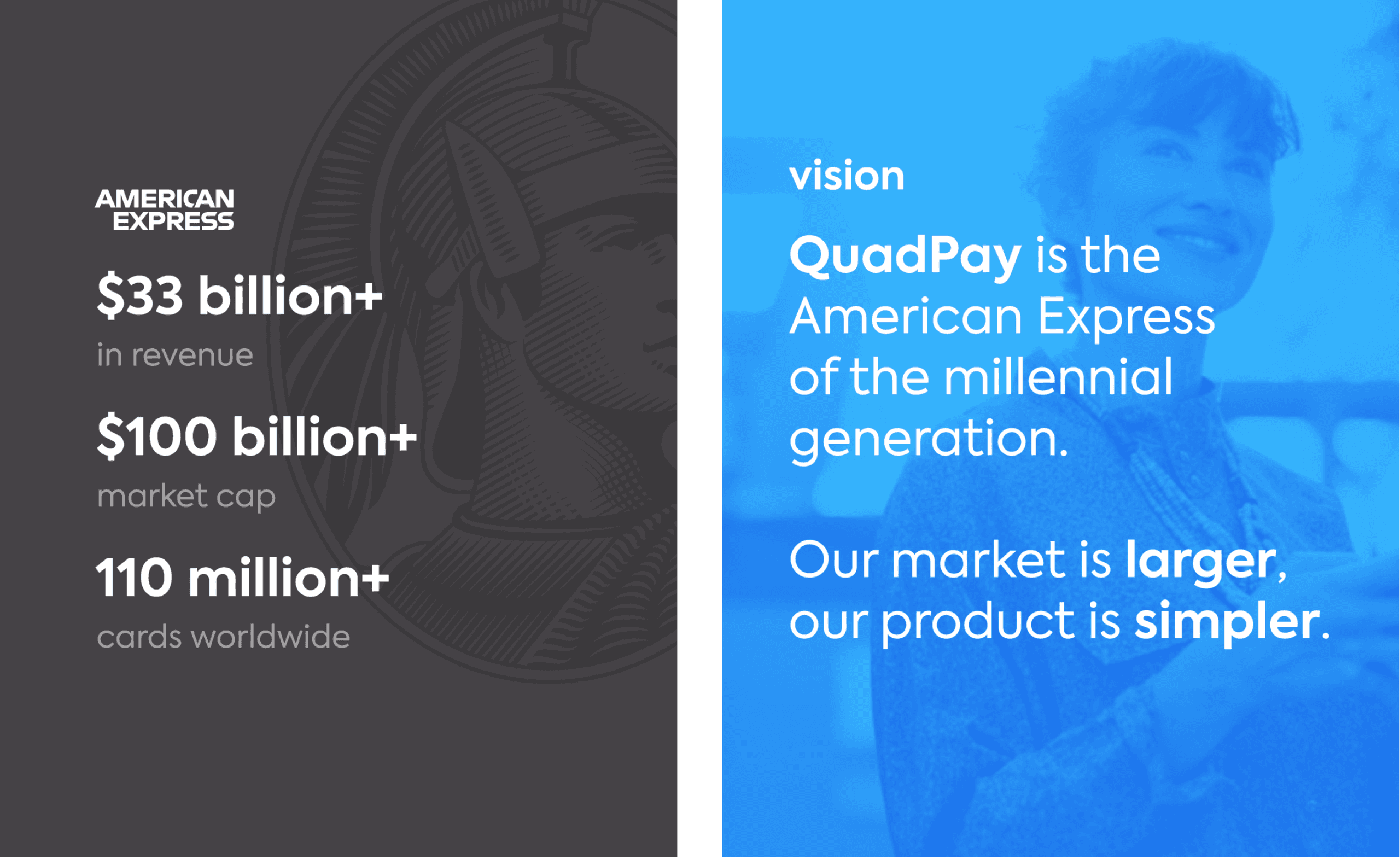
I joined QuadPay as the first designer in 2017. At that point it was a deck and an idea: bring buy-now-pay-later to the US, where the model barely existed but was already big in Australia and Europe. Three years later we'd shipped the brand, the checkout, the apps, a virtual card, and a physical card. Zip acquired QuadPay in 2020 for about $300M.
- Client
- QuadPay
- Role
- Senior Product Designer
- Timeline
- 2017–2020
The Brief
A new category, no product yet to ship.
The problem
The solution
Product
Designing for shoppers and merchants at once.
Buy now, pay later was simple to explain: split a purchase into four interest-free payments over six weeks. We were designing for two audiences at once.
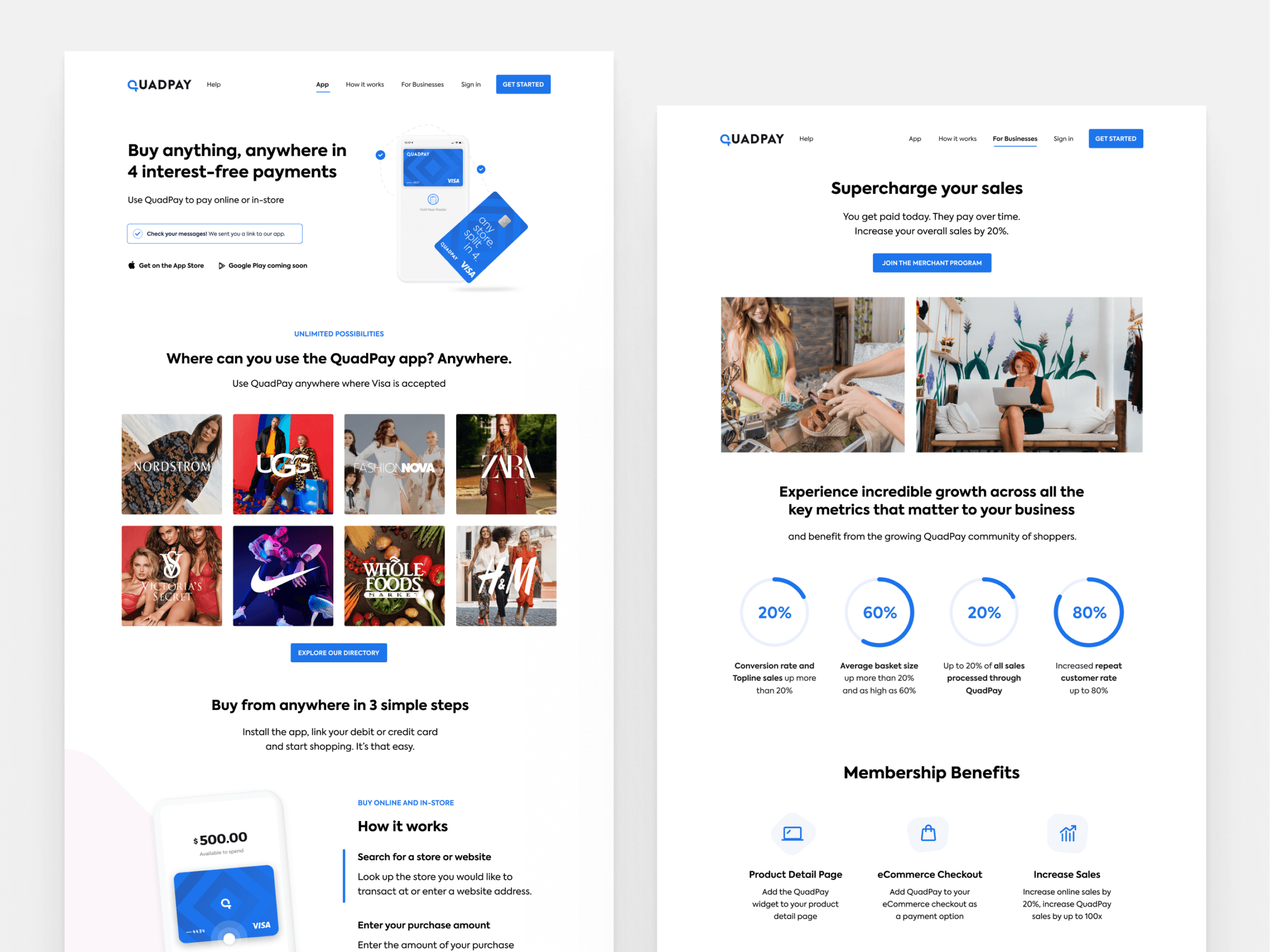
Shoppers needed to trust a checkout option they'd never heard of. Merchants needed to integrate QuadPay into their checkouts manually, one engineering deal at a time, and they needed conversion data to justify the work. The brand had to be friendly enough for shoppers and credible enough to win merchant pitches.
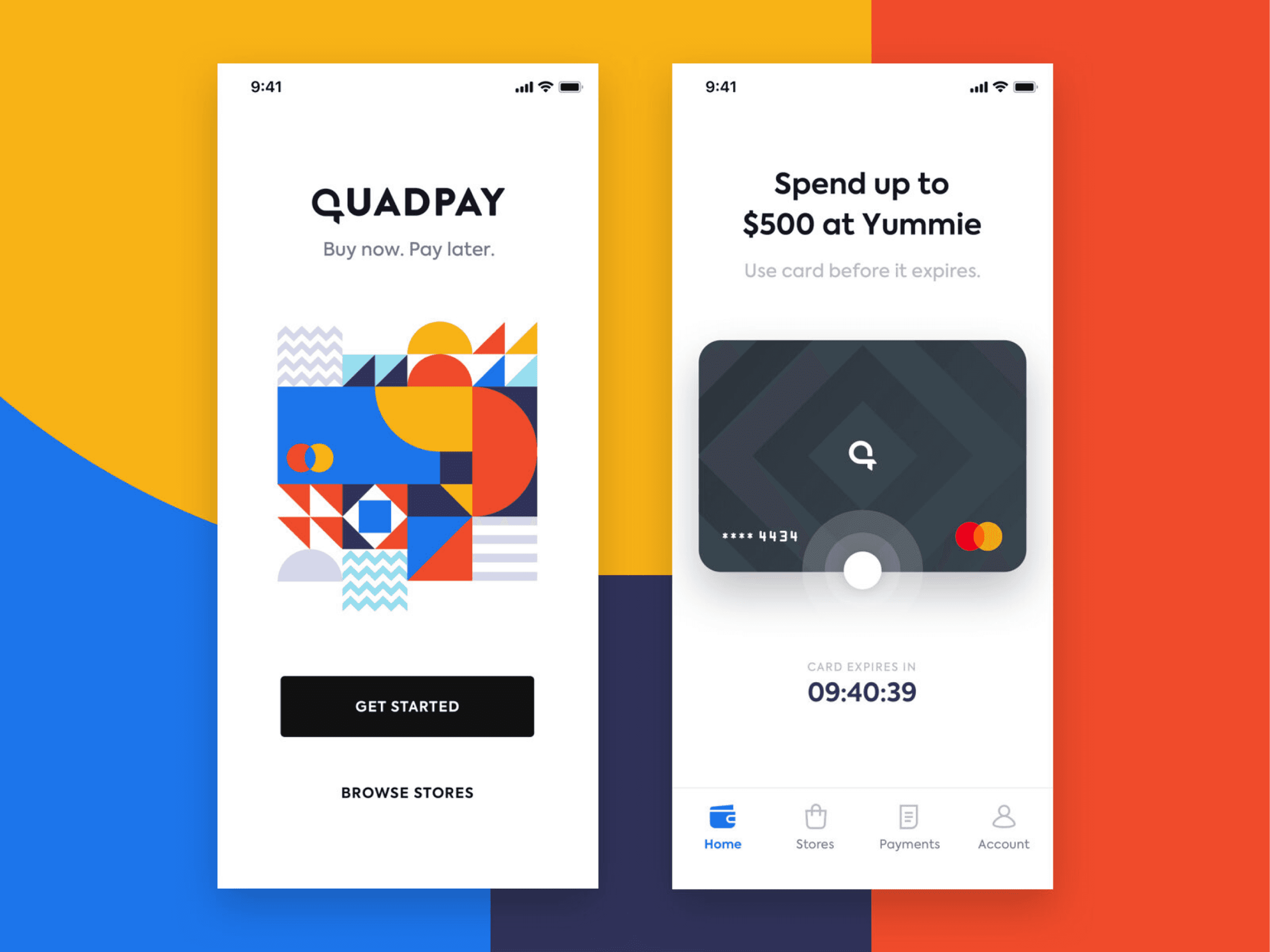
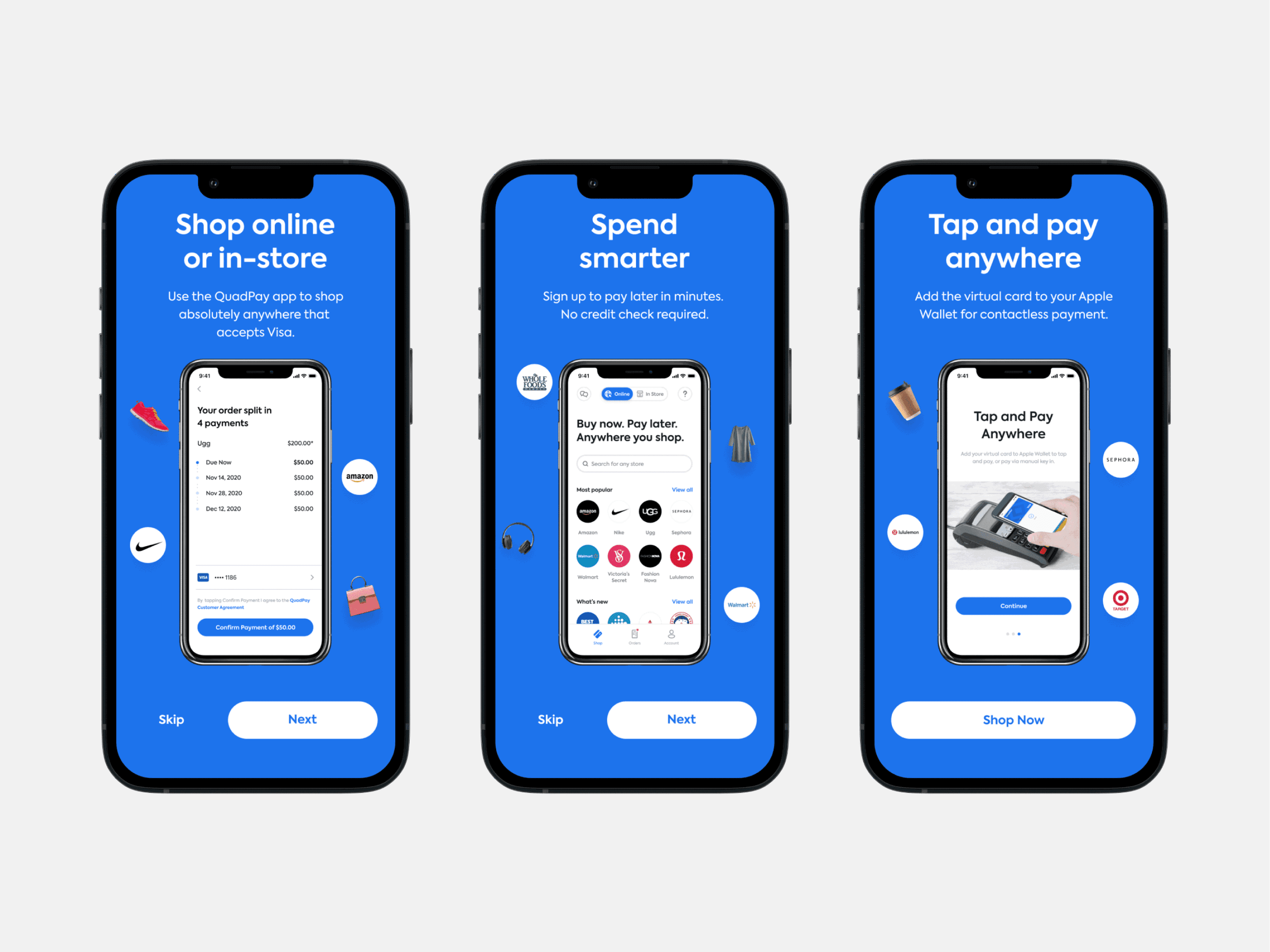
The first product was a one-tap checkout integration at partner merchants.
Brand
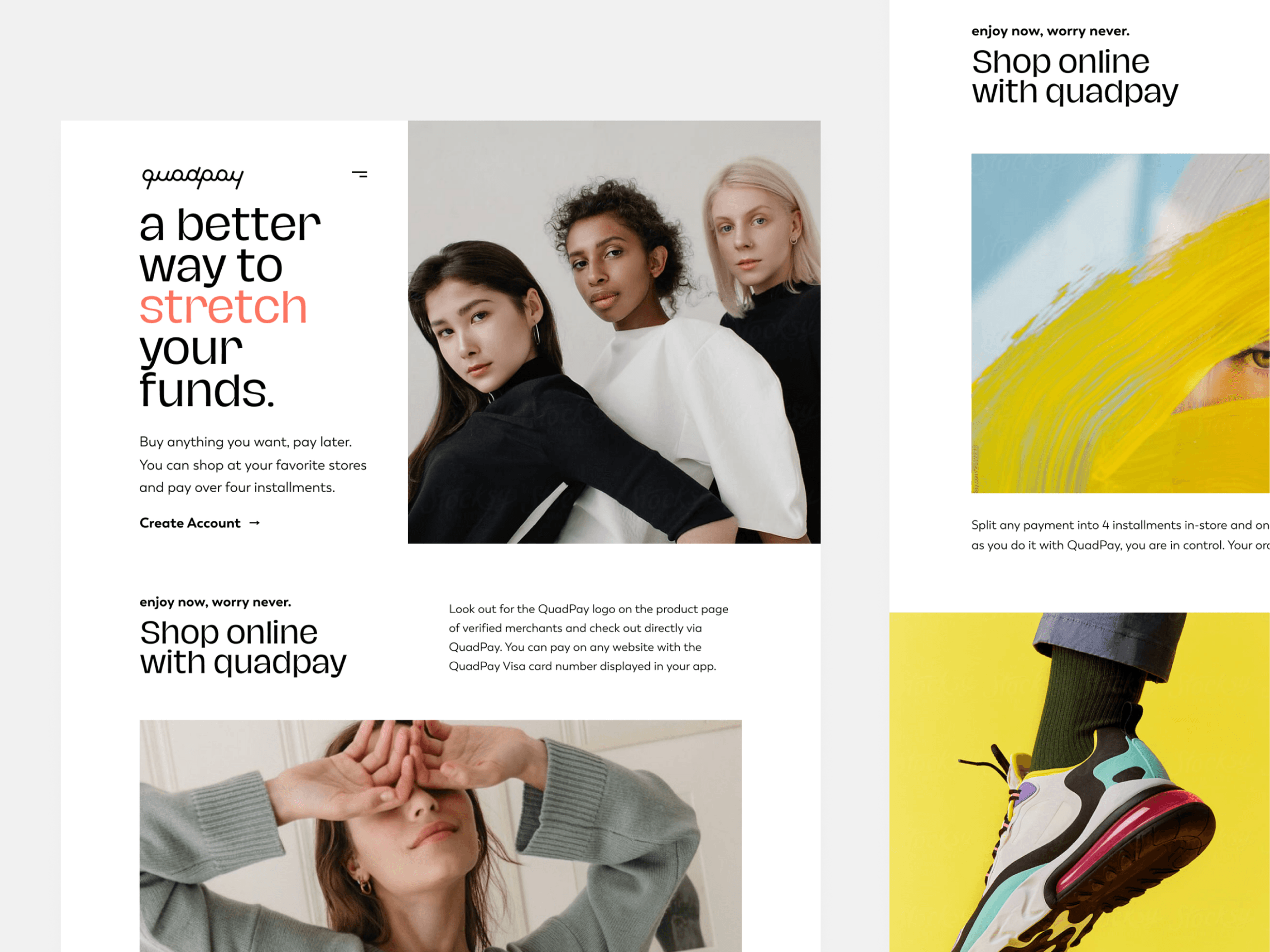
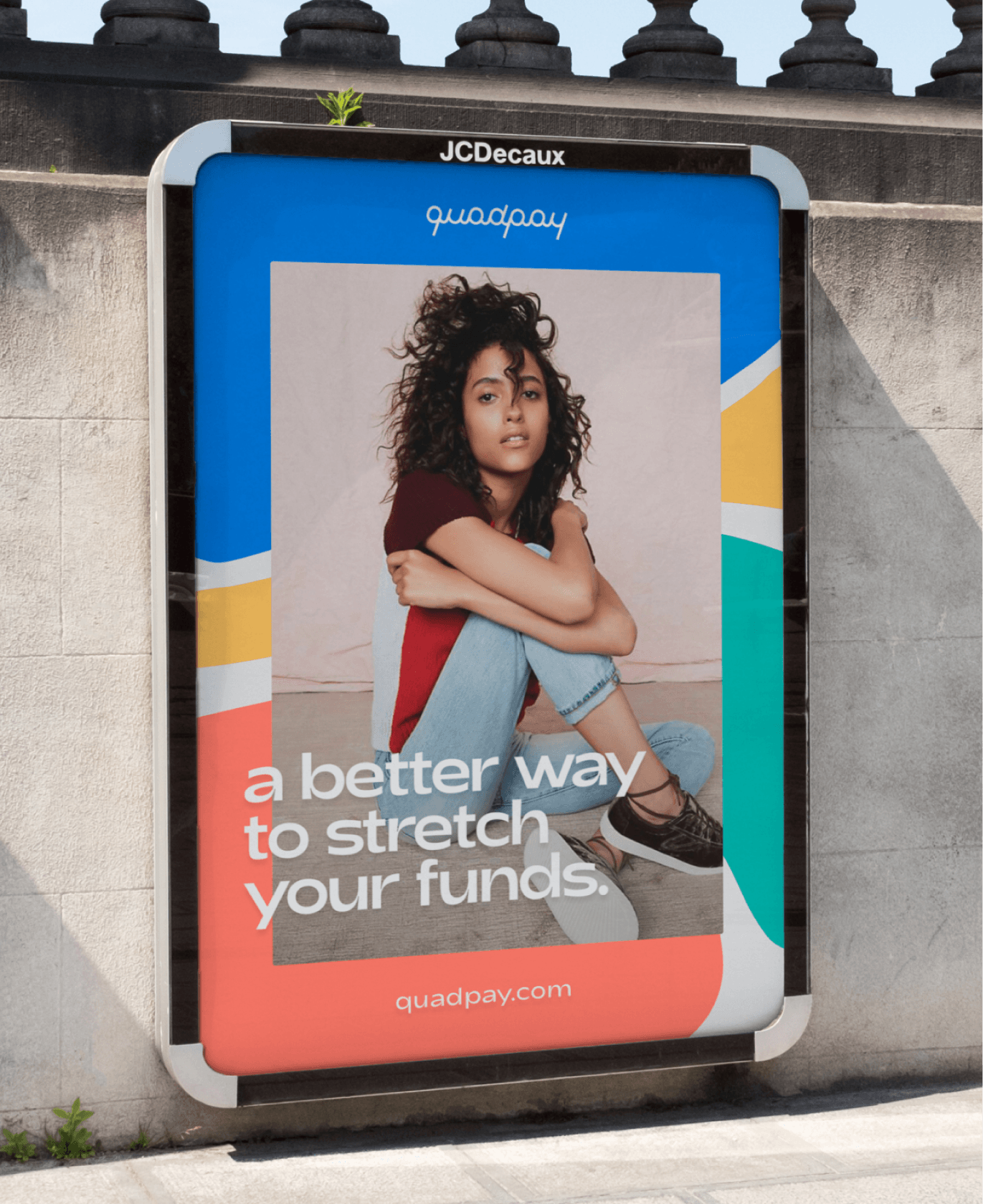
A vivid identity that could ship as fast as the product.
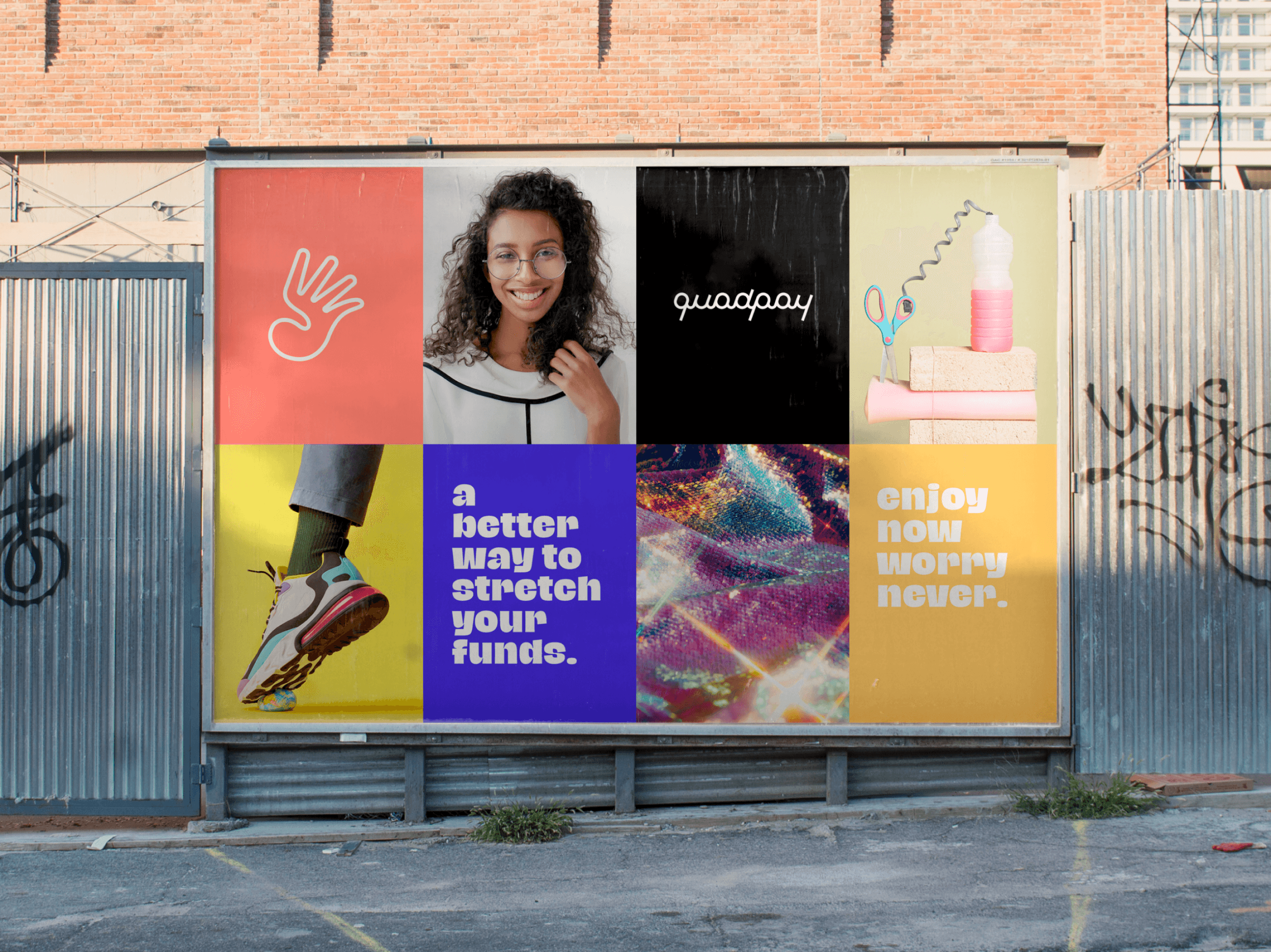
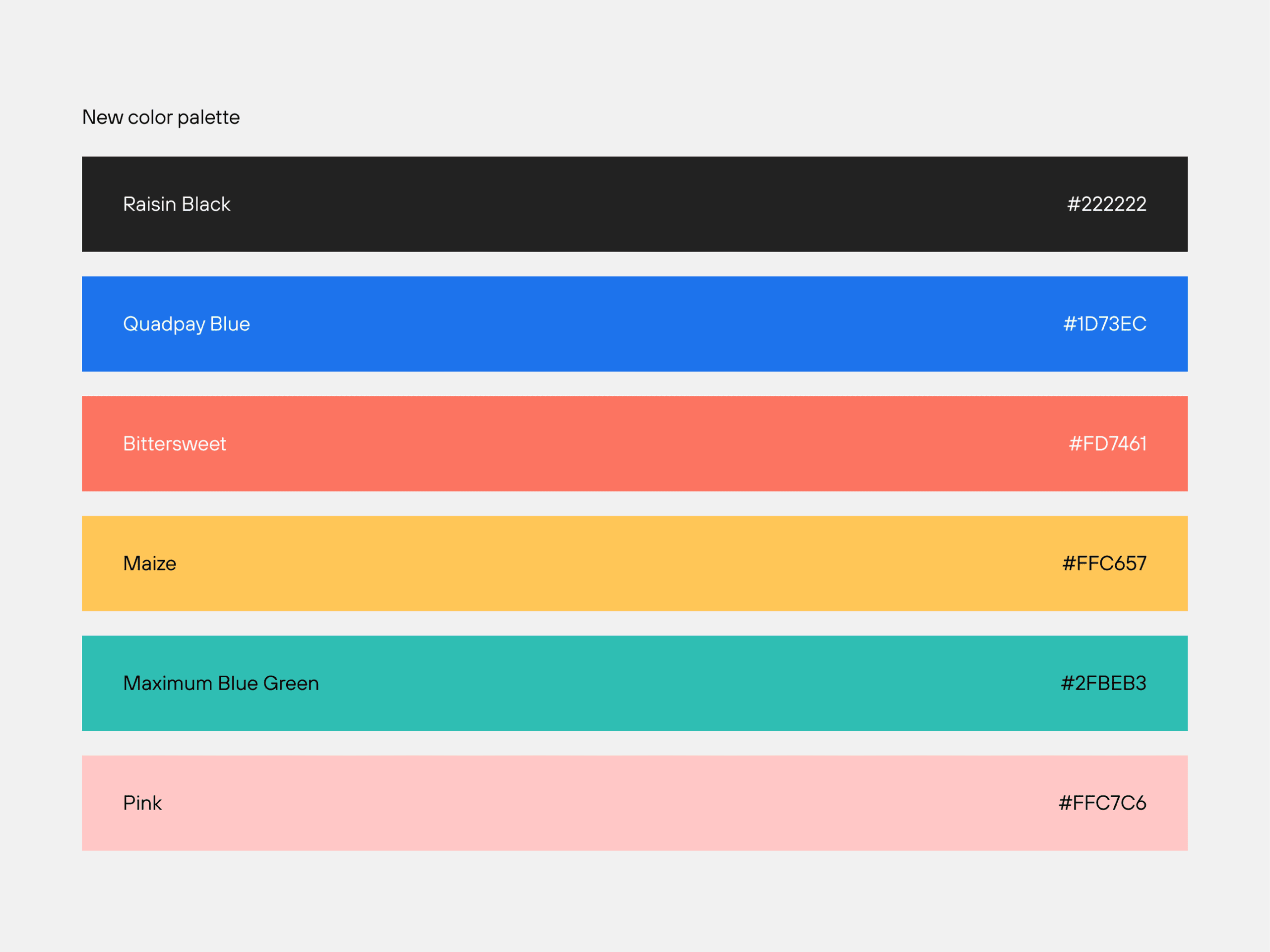
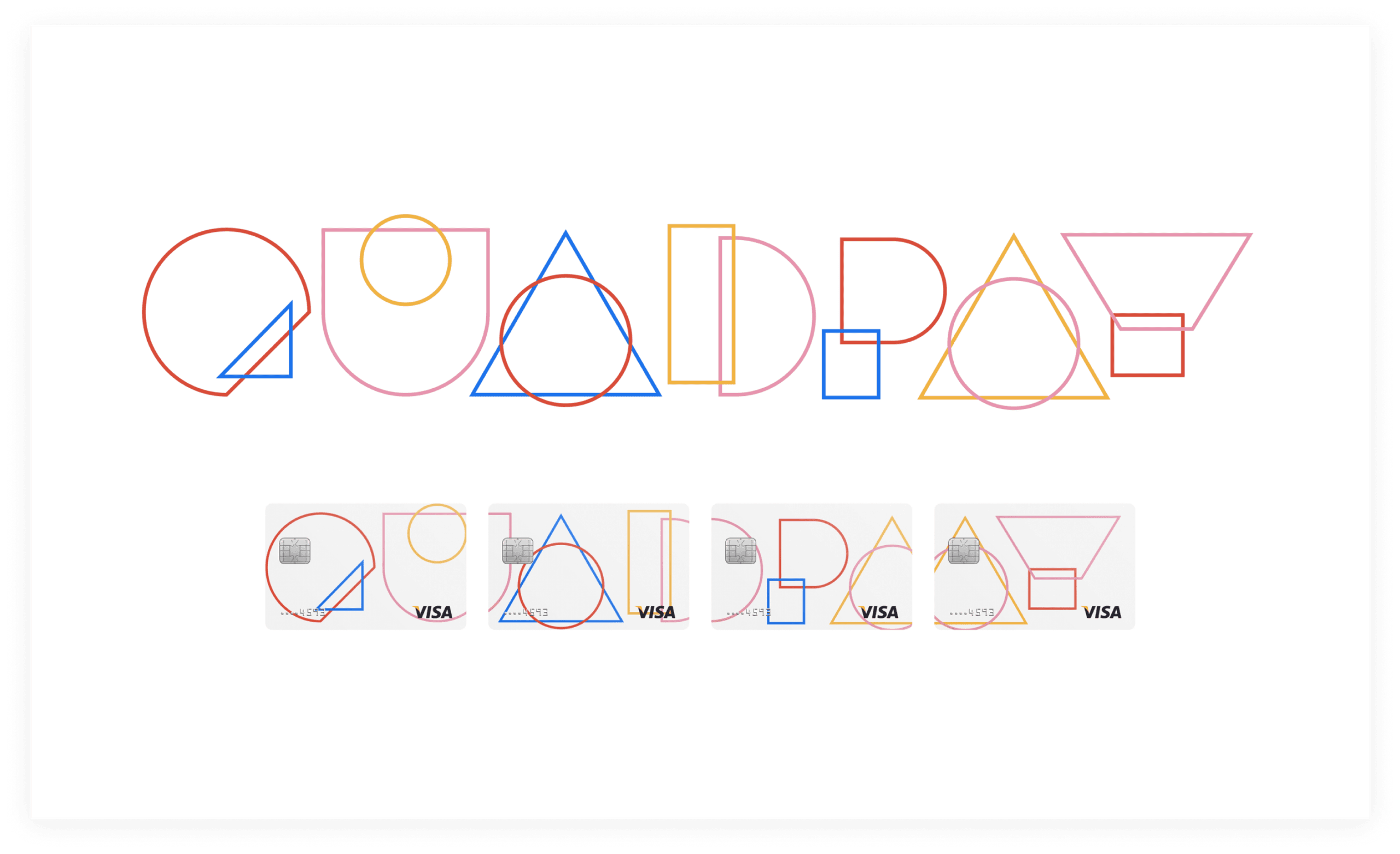
Building the brand in-house meant it moved at the same pace as the product: we could test a campaign, social posts, and a product update in the same week. Buy now, pay later didn't have a look in the US yet, so we made one, and made it loud on purpose.
Product evolution
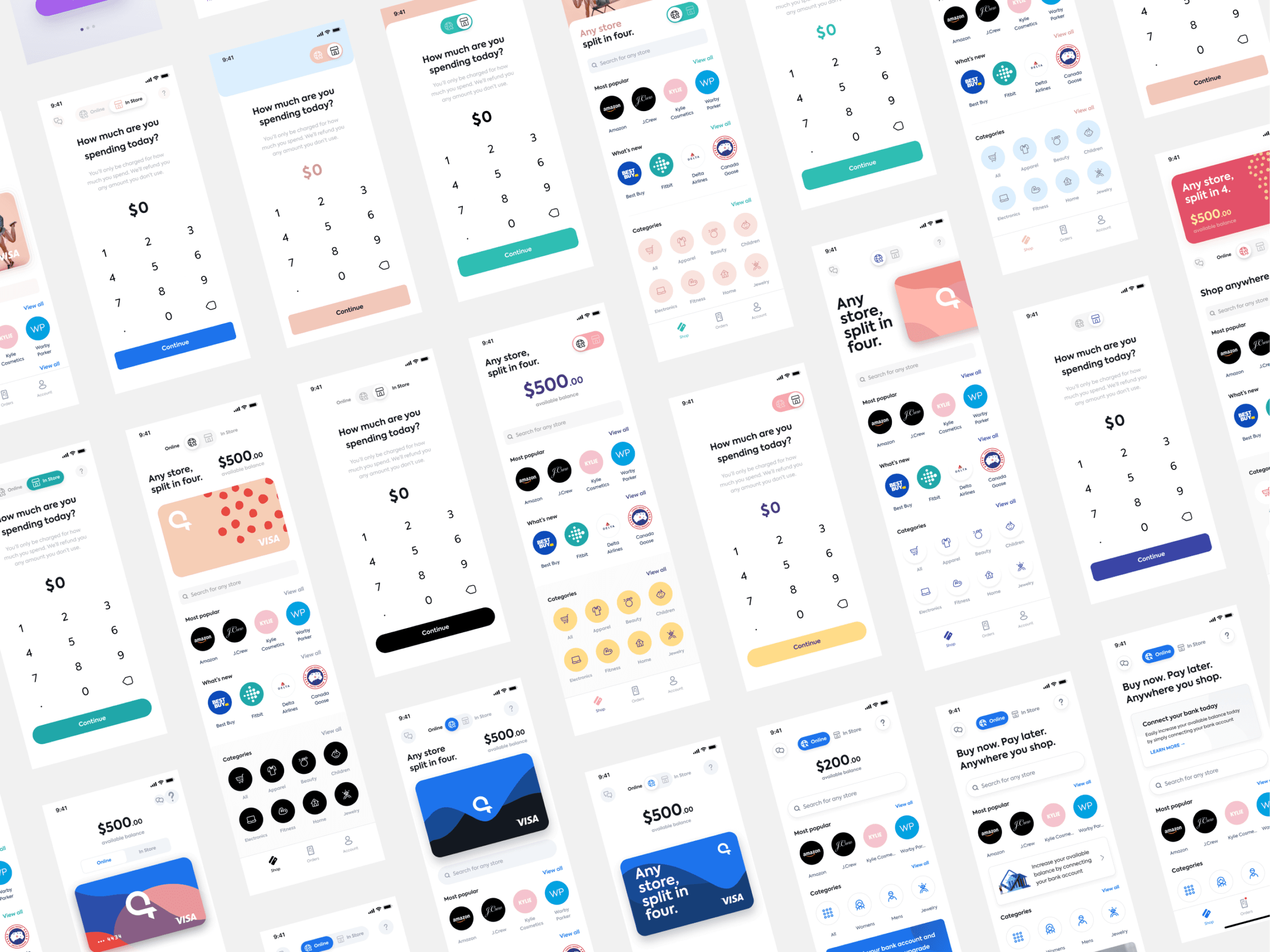
From a checkout to a wallet.
Once enough merchants said yes to the checkout, we had the network we needed to build the rest of the product.
The virtual card came next, so customers could use QuadPay anywhere, not just at partner sites. Then came the merchant dashboard, an ML-driven discount engine, referrals, and order management. The mobile app went from a receipt log to a full wallet.
Physical card
A VISA card that defaulted to four installments.
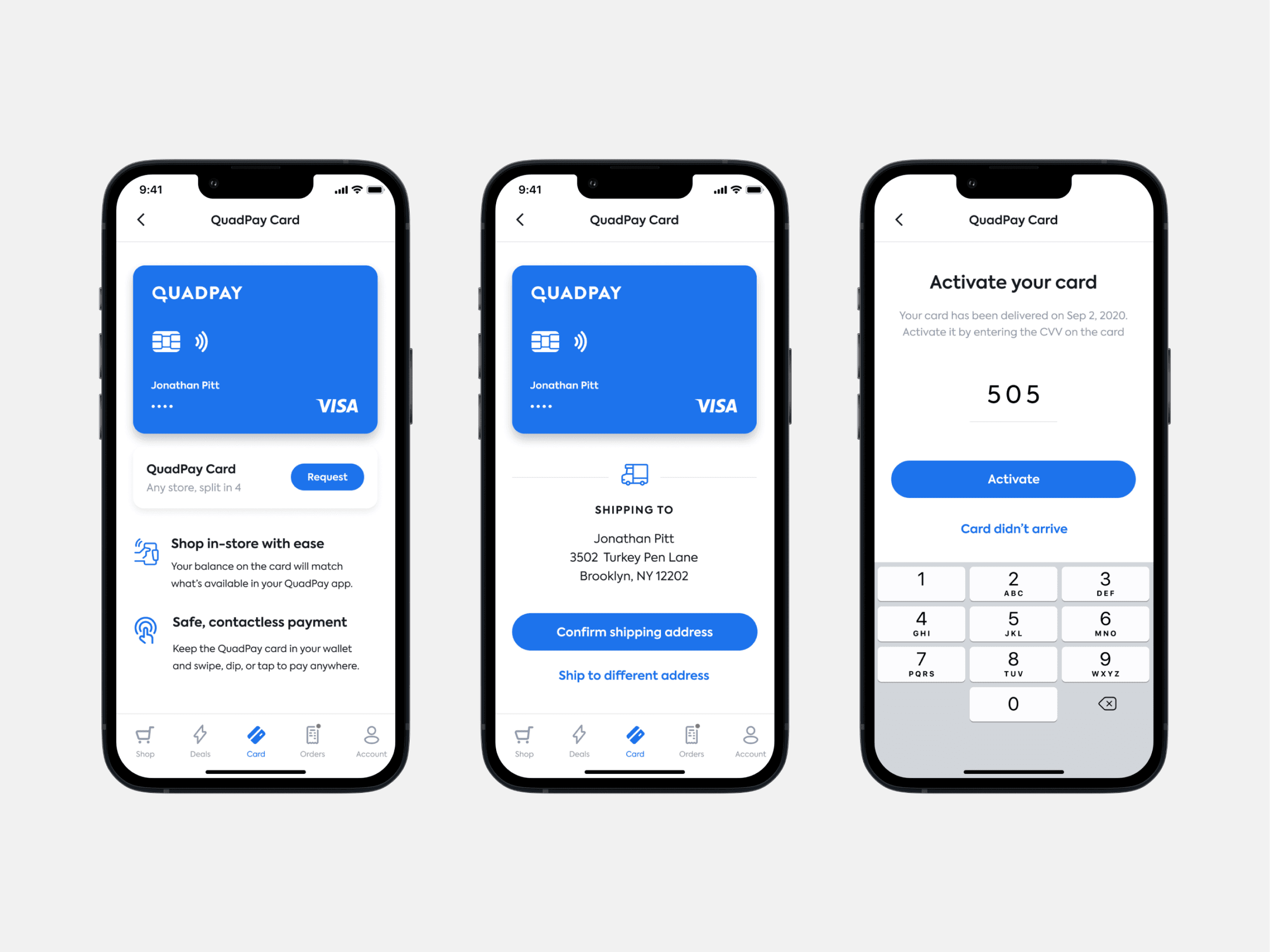
Premium users wanted QuadPay outside e-commerce: the coffee shop, the hardware store, anywhere a merchant didn't accept tap-to-pay. The physical card extended the four-installment model to every VISA terminal in the country.
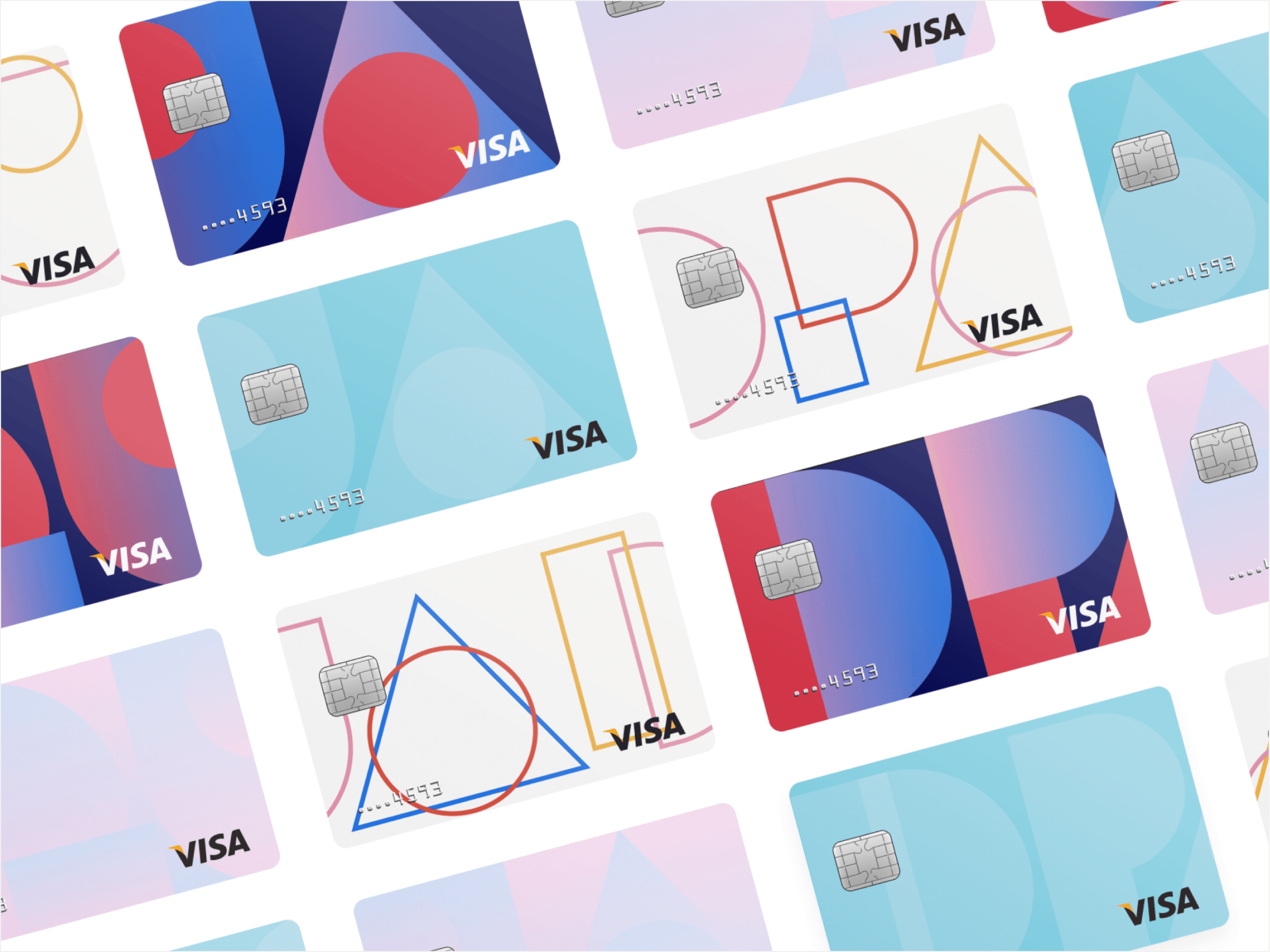
Most of the design work went into the unboxing and activation rather than the card face. The card had to arrive feeling like something worth keeping in your wallet.
Impact
App Store rating across 100K+ ratings
Customers at acquisition
Acquired by Zip, 2020
What I took from it
Three things I'd carry into the next one.
The first design problem was trust.
BNPL barely existed in the US in 2017, so standing out from competitors mattered less than looking credible enough that someone would let us hold their debit card.
Keep the brand close to the product team.
In my experience, brand work done by an agency always lagged the product. QuadPay's brand kept up because it was built in-house, next to the product.
Being the only designer only works in the right company.
Three years as QuadPay's only designer worked because leadership had design sense and could make calls without me in the room. Once a company starts waiting on design for every decision, one designer isn't enough.
Testimonial
“Santiago is a consummate professional and creative genius who was instrumental in building our brand and product from a standing start. He has a great sense of branding, user experience and thinks deeply about the customer and their interaction with the product. Santiago is a hard worker and is very efficient in creating high quality usable work quickly. I highly recommend him for any startup or company.”

Brad Lindenberg
CEO & Co-founder at QuadPay